
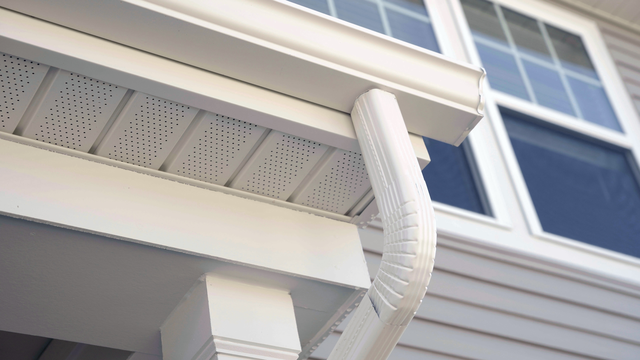
Most homeowners only think about their gutters when something goes wrong. Water spills over the edge during a summer storm. Icicles hang off the eaves in February. A wet spot shows up in the basement after the spring thaw. By then the gutters have usually been struggling for a while.
This gutter guide covers what Minnesota homeowners need to know in one place. Think of it as a gutter guide for the whole year, not only for the day something breaks. You will learn what gutters do, the parts of a gutter system, how a system behaves through our four seasons, and how to choose, clean and protect one. Each section links to a deeper guide or to the service page that covers the job.
We work on homes and cabins across the Brainerd Lakes area and central Minnesota, so the advice here is written for heavy snow, deep frost, pine needles and lake-lot yards. If you would rather have someone look at your home first, our gutter service team can inspect the whole system and tell you what it needs.
Key Takeaways
- Gutters carry roof water to downspouts that drain it away from your foundation.
- Most Minnesota homes need seamless 5- or 6-inch K-style aluminum gutters.
- Clean your gutters at least twice a year, in late spring and late fall.
- Ice dams start with attic heat loss, so fix the attic, not just the ice.
- Downspouts that empty beside the foundation cause many wet basements.
What do gutters do?
Gutters collect the water that runs off your roof and move it to a few controlled points, the downspouts, instead of letting it fall along the whole roof edge. That one job protects several parts of the house at once.
Without gutters, roof water drops straight down beside the foundation. Over time that water can:
- Soak the soil next to the basement walls and push moisture inside.
- Wash out mulch, flower beds and the soil that slopes away from the house.
- Splash dirt onto siding and keep the bottom of the walls wet.
- Pool at doorways, steps and walkways, where it freezes in winter.
- Rot fascia boards and soffits when water runs behind a missing or failing gutter.
The U.S. Department of Energy’s Building America Solution Center recommends gutters and downspouts as a way to keep the soil around a foundation from becoming saturated. The International Residential Code goes further where soils are expansive or collapsible: section R801.3 requires roof water to be discharged at least 5 feet from the foundation or into an approved drainage system, as summarized by the International Code Council.
In short, gutters are a water management system, and that idea runs through every section of this gutter guide. The roof sheds water, the gutters gather it, and the downspouts carry it somewhere it can drain safely away from the house.
Parts of a gutter system
A complete set of gutter systems components is more than the trough you see from the street. Knowing the parts makes it easier to describe a problem and to compare quotes. Use this part of the gutter guide as a checklist when you walk around your house.
The parts that carry water
- Gutter runs: the horizontal channels along the eaves. Seamless gutters are formed on site in one piece for each run, so there are no joints along the length.
- End caps: closures at the ends of each run.
- Outlets (drops): the openings in the bottom of the gutter where water leaves for the downspout.
- Downspouts: the vertical pipes that carry water to the ground.
- Elbows: the angled pieces that route a downspout around the roof overhang and turn it away from the wall at the bottom.
- Extensions, splash blocks and buried lines: the pieces that move water the last few feet away from the foundation.
The parts that hold it all up
- Hangers: brackets inside the gutter that fasten it to the fascia. Spacing matters in Minnesota, because a gutter full of ice and snow is heavy.
- Fascia board: the board behind the gutter. A soft or rotted fascia cannot hold hangers tight.
- Gutter apron or drip edge: flashing that guides water from the roof edge into the gutter instead of behind it.
Add-ons
- Gutter guards: covers or screens that keep leaves and needles out of the trough.
- Heat cables: electric cables that keep a path open for meltwater in winter.
- Rain chains, rain barrels and pop-up emitters: alternatives and add-ons for where the water ends up.
How do gutters work through a Minnesota year?
Gutters work by gravity. Each run is pitched slightly toward its outlet so water flows to the downspout instead of sitting in the trough. The Building America Solution Center recommends a slope of at least 1/16 inch per foot of run. Too little slope leaves standing water. Too much makes the gutter look crooked and can send water past the outlet in a heavy rain.
So, how do gutters work? By gravity and pitch. What makes our area different is that the same system has to handle four very different jobs in one year.
Spring: snowmelt and saturated ground
Snow on the roof melts in March and April while the ground is still frozen or soaked. Gutters and downspouts carry that meltwater day after day, and any downspout that empties next to the foundation sends water straight toward the basement.
Summer: short, heavy storms
Thunderstorms can drop a lot of rain in a short time. This is when an undersized gutter or a clogged outlet overflows, and when you find out whether your downspouts are big enough.
Fall: leaves, needles and seed pods
Oaks, maples and the pines that line our lakes fill gutters quickly. Pine needles are a particular problem because they mat together and block outlets and some types of guards.
Winter: snow load and ice
Average annual snowfall in Minnesota ranges from about 36 inches in the southwest to more than 70 inches along the North Shore, according to the Minnesota DNR. Snow and ice add weight to gutters and hangers, and freeze-thaw cycles can turn a gutter into a trough of ice. That is why fastening, pitch and roof heat loss matter so much here.
Choosing gutters: styles, sizes and materials
Most homes we work on get seamless gutters, because a gutter run with no joints has fewer places to leak. Beyond that, three choices shape the system: style, size and material. This gutter guide gives the short version of each.
Style
- K-style gutters have a flat back and a decorative front that looks like crown molding. They are the most common style on Minnesota homes and hold a lot of water for their width.
- Half-round gutters have a rounded trough. They suit older and traditional homes and are often paired with round downspouts.
- Box-style gutters are larger and are often used on commercial buildings and some custom homes.
Size
5-inch gutters fit many homes with average roof areas and pitches. 6-inch gutters carry more water and suit larger or steeper roofs, long runs, and roofs that drain into one valley. Downspout size matters as much as gutter size: a large gutter with a small downspout will still overflow.
Material
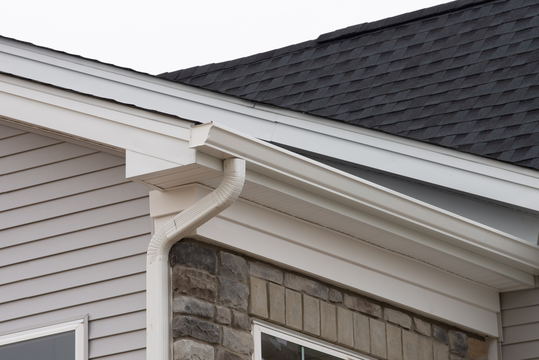
Aluminum is the most common choice for seamless gutters because it is light, does not rust and can be formed on site in many colors. Steel and copper cost more and are used where strength or appearance is the priority. Vinyl is sold for do-it-yourself installs, but it can become brittle in deep cold.
Keeping gutters clean
Regular gutter cleaning is the simplest way to make a gutter system last. Debris holds water against the metal, weighs down hangers and blocks outlets, and a clogged gutter in October often becomes a gutter full of ice in December.
Most Minnesota homes need cleaning at least twice a year: once in late spring after seeds and blossoms drop, and once in late fall after the leaves are down. Homes under pines or large oaks often need more. We explain why a professional cleaning is often the safer choice in 3 Reasons to Hire a Professional for Gutter Cleaning.
Gutter guards reduce how often you need to clean, but they do not make gutters maintenance free. Different guard types handle leaves, needles and ice differently. Our post on the benefits of gutter guards covers the basics.
Winter: ice dams, snow and heat cables
Our gutter winterization work starts with one fact: in Minnesota, most winter gutter problems begin on the roof, not in the gutter.
Ice dams form when heat escaping from the house warms parts of the roof, melts snow from underneath, and the water refreezes at the colder eaves. The University of Minnesota Extension explains that it is mainly heat flowing from the house that creates the uneven roof temperatures behind ice dams, in its guide to dealing with and preventing ice dams. Gutters do not cause ice dams, but a gutter packed with ice makes the backup worse and can be pulled loose by the weight.
Three services help in winter:
- Roof snow removal takes weight and meltwater off the roof before ice builds up.
- Ice dam removal clears ice that is already backing water under the shingles. We use steam, which melts a channel through the ice without chipping the roof.
- Gutter heat cables keep a path open for meltwater in trouble spots such as valleys and north-facing eaves.
Where the water goes: downspouts and yard drainage
A gutter system is only as good as its last few feet. Our drainage service often starts with homeowners who have good gutters and a wet basement, because the downspouts empty right beside the foundation.
Simple fixes include longer extensions, splash blocks and pop-up emitters. When water has nowhere to go, the answer may be a buried line, a French drain or a catch basin. On lake properties, the slope toward the water and the location of wells and septic systems also shape where drainage can go.
Proper downspout installation also means enough downspouts, placed where the roof actually sends its water, and sized to match the gutters.
Gutter Guide Checklist: Signs Your Gutters Need Attention
Most problems that call for gutter repair show warning signs well before they cause damage. Walk around the house during or right after a rain and look for:
- Water spilling over the front edge of the gutter.
- Drips from seams, corners or end caps.
- Gutters that sag or pull away from the fascia.
- Standing water in the trough a day after the rain stops.
- Peeling paint, stains or rot on the fascia and soffit.
- Washed-out soil or mulch under the roof edge.
- Large icicles along the eaves in winter.
Some of these can be repaired. Others mean the system has reached the end of its life. Our post on 3 signs you need to replace your gutters helps you tell the difference.
Hiring a gutter contractor
Every gutter guide ends at the same place: someone has to do the work. Learn about Lake Country Seamless Gutters before you call, and ask the same questions of every contractor you talk to. A good gutter company will measure your roof, explain the size and number of downspouts it recommends, and tell you where the water will end up.
Our checklist of questions to ask a gutter company covers insurance, warranties and what is included in a quote. You can also read what local homeowners say in our reviews.
Frequently Asked Questions
1. What do gutters do?
Gutters collect water running off the roof and send it to downspouts, which carry it away from the house. This keeps water from soaking the soil next to the foundation, washing out landscaping, staining siding and freezing on walkways. In Minnesota, gutters also carry weeks of snowmelt each spring, which is when poor drainage most often shows up as basement moisture.
2. How do gutters work?
Gutters work by gravity. Each run is pitched slightly toward an outlet, usually at least 1/16 inch per foot, so water flows to the downspout instead of standing in the trough. The downspout carries water to the ground, where an elbow, extension or buried line moves it away from the foundation. Every part has to be sized for the roof area it drains.
3. What are the parts of a gutter system?
The main parts are the gutter runs, end caps, outlets, downspouts and elbows. Hangers fasten the gutter to the fascia board, and a gutter apron or drip edge guides water into the trough. Extensions, splash blocks and buried lines handle water at ground level. Optional add-ons include gutter guards, heat cables and rain chains.
4. What type of gutter is best for a Minnesota home?
Seamless aluminum K-style gutters are the most common choice on Minnesota homes. They have no joints along each run, come in many colors and hold plenty of water for their width. Half-round gutters suit traditional homes. The right size depends on roof area and pitch, so a measured quote is better than choosing by style alone.
5. Do I need 5-inch or 6-inch gutters?
Many homes with average roof areas do well with 5-inch gutters. Six-inch gutters carry more water and are a better fit for large or steep roofs, long runs, roofs where valleys concentrate water, and homes that overflow in heavy storms. Downspout size and count matter too. Our installers size both from your roof measurements.
6. Are seamless gutters worth it?
For most homes, yes. Sectional gutters are joined every 10 feet or so, and each joint is a place that can leak as sealant ages through freeze-thaw cycles. Seamless gutters are formed on site to the length of each run, so the only joints are at corners and downspout outlets. That usually means fewer leaks and less upkeep.
7. How often should gutters be cleaned in Minnesota?
Plan on at least twice a year: late spring after seeds and blossoms fall, and late fall after leaves are down. Homes under pines, oaks or maples often need a third cleaning. Clearing gutters before winter matters most, because debris holds water that freezes and adds weight to the gutters during the coldest months.
8. Do gutter guards mean I never have to clean my gutters?
No. Gutter guards cut down how often you need to clean, but debris still collects on top of some guards, and fine material such as pine needles and roof grit can get through others. Guards should be checked at least once a year and cleaned when needed. The right guard type depends on the trees around your home.
9. How long do gutters last?
Lifespan depends on material, installation and care. Aluminum seamless gutters that are pitched and fastened correctly and kept clean often last 20 years or more. Vinyl tends to fail sooner in deep cold. Gutters that sag, leak at many joints or have rotted fascia behind them are often better replaced than patched.
10. What areas do you serve?
We serve the Brainerd Lakes area and central Minnesota, including Brainerd, Baxter, Nisswa, Pequot Lakes, Crosslake, Breezy Point, Crosby, Aitkin, Grand Rapids, Walker, Park Rapids and nearby towns. See our Minnesota gutter service page for the full list of communities we cover.
Keep Your Gutter System Working Year Round
A gutter system has one job: move roof water to a place where it can drain away from your home. In Minnesota that job changes with the seasons, from spring snowmelt to summer storms to fall leaves and winter ice. Choosing the right style and size, keeping the system clean, managing heat loss on the roof and sending downspout water away from the foundation all work together.
Bookmark this gutter guide and use it as a starting point, then read the deeper guide for the part of the system you are working on. When you are ready for a second opinion, our gutter service team can inspect your home and recommend the fix that fits.
About LC Seamless Gutters
LC Seamless Gutters (Lake Country Seamless Gutters) installs, repairs, cleans and winterizes gutters on homes and cabins across the Brainerd Lakes area and central Minnesota. Our crews form seamless gutters on site, install gutter guards and heat cables, remove ice dams with steam, and build drainage systems that carry water away from the foundation. Learn more about LC Seamless Gutters or read our reviews from local homeowners.
Next Steps: Get a Gutter Inspection
Our gutter service covers installation, repair, cleaning, guards, winterization and drainage, so one visit can look at the whole system. Tell us what you are seeing, from overflowing gutters to winter ice, and we will recommend a plan that fits your home and budget. Request a quote or contact Lake Country Seamless Gutters to schedule a visit.